


It’s a familiar scenario for many businesses: you’re pouring money into Google and Meta Ads, seeing your click-through rates rise, and your website traffic climb. Yet, when you look at the bottom line, that sustained, predictable growth you envisioned isn’t materializing. The ad budget seems like a black hole, constantly demanding more, without a clear return that truly moves the needle for your business.
Here’s the real issue: many companies get trapped in the illusion of activity, mistaking high traffic for actual business success. But what if your advertising efforts, despite their apparent 'success,' are actually hindering your sustainable growth? Ossiba believes the goal isn’t just to get clicks; it’s to build a digital advertising engine that fuels genuine, long-term profitability.
The Illusion of Activity: Why Clicks and Impressions Aren't Enough
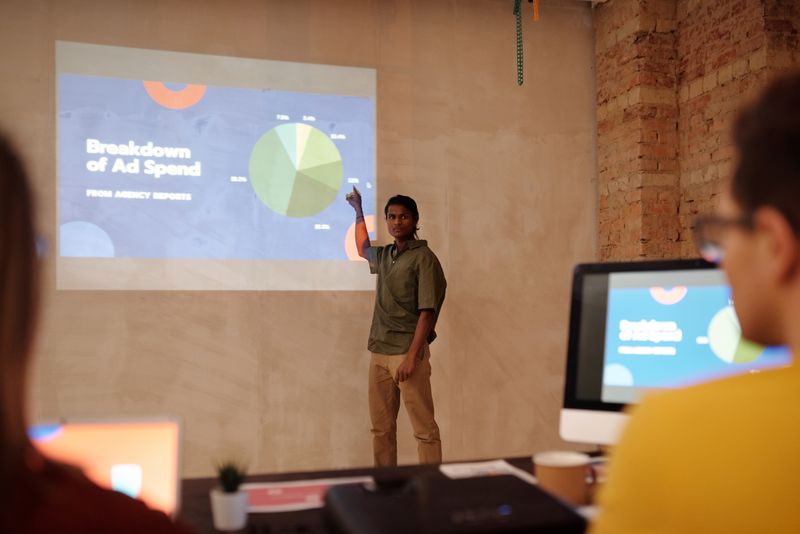
In the digital marketing world, it’s easy to get caught up in what we call ‘vanity metrics.’ Clicks, impressions, even high conversion rates on specific landing pages – these can all look great on a report. Your team might celebrate reaching a wider audience or driving more visitors to your site. However, if those visitors aren’t turning into loyal, repeat customers, or if your customer acquisition cost (CAC) is higher than their lifetime value (LTV), you’re not building a business; you’re just spending money.
Most businesses realize this point a little too late. They focus on optimizing for the cheapest click or the highest volume of impressions, instead of the most valuable customer. This error often appears as an ad performance problem, but it’s actually a strategic one. Your campaigns might be technically perfect, but if they’re targeting the wrong audience with the wrong message, or if your follow-up process is broken, efficiency becomes irrelevant.
Ossiba's Comment: Beyond the Numbers Game
For us, ad success isn’t a numbers game measured in clicks, but a profitability game measured in sustainable growth. A campaign with fewer clicks but higher quality leads, who convert into high-LTV customers, is infinitely more valuable than a high-volume, low-quality traffic generator. This requires a deeper understanding of your business model, not just ad platform mechanics.
Connecting Ad Spend to Real Business Metrics: Beyond Immediate Sales

True sustainable profitability from Google and Meta Ads comes from understanding the full customer journey and its financial impact. This means moving beyond immediate sales and looking at metrics like Customer Lifetime Value (LTV) and Customer Acquisition Cost (CAC) as your guiding stars. A campaign might generate a sale today, but if that customer never returns, the long-term value might be minimal compared to your spend.
Consider this: if acquiring a customer costs you $50 through ads, but that customer typically spends $150 over their lifetime with your business, that’s a profitable relationship. But if they spend only $40, you’re losing money on every acquisition. This small detail, often overlooked, can make a significant difference in your conversion and overall business health.
Practical Application Example: The E-commerce LTV Journey
Imagine an e-commerce brand selling artisan coffee. Instead of just tracking how many people click their ad and buy one bag of coffee, they integrate their ad data with their CRM. They track repeat purchases, subscription sign-ups, and engagement with loyalty programs initiated by customers who first clicked a specific ad. This allows them to see that while a certain ad campaign might have a slightly higher CAC for the initial sale, it consistently brings in customers with a 3x higher LTV due to their propensity for repeat purchases and subscriptions. This data-driven insight completely shifts their budget allocation, favoring campaigns that drive long-term customer relationships over immediate, one-off sales.
Building a Sustainable Ads Strategy: Focus on Value, Not Just Volume
Building an ads strategy for sustainable profitability is about precision, not just power. It involves several critical steps:
- Define Your Ideal Customer Profile (ICP) Rigorously: Who are your most profitable customers? What are their demographics, psychographics, online behaviors, and pain points? This goes beyond basic targeting.
- Craft Compelling Offers Aligned with LTV: Your ad offers shouldn't just aim for any conversion, but for conversions that lead to high-value customers. This might mean nurturing leads with educational content before a hard sell, or offering subscription models upfront.
- Optimize Landing Pages for the Entire Customer Journey: A landing page isn't just for capturing a lead; it’s the beginning of a relationship. It must be relevant, trustworthy, and guide the user toward the next logical step in their value journey with you.
- Embrace A/B Testing for Profitability, Not Just Conversion Rates: Test ad copy, visuals, and landing page elements not just for higher conversion rates, but for higher quality conversions that contribute to LTV and a healthier CAC.
What Should You Do? A Checklist for Sustainable Ads Growth
- Re-evaluate Campaign Goals: Are your current goals focused on vanity metrics or genuine business growth?
- Integrate Your Data: Connect your ad platforms with your CRM and analytics tools to track the full customer lifecycle.
- Analyze Customer Journey: Map out how your most profitable customers interact with your ads and website.
- Audit Your Targeting: Are you truly reaching your ICP, or just a broad audience?
- Test Beyond the Click: Experiment with offers and landing pages designed to attract high-LTV customers.
Ossiba's Approach: Strategic Ads for Long-Term Growth
At Ossiba, we understand that your ad budget is an investment, not an expense. Our approach to Google & Meta Ads goes beyond simply managing campaigns; we integrate them into your overarching business strategy. We dive deep into your unique business model, identify your most profitable customer segments, and build campaigns designed to attract and retain those high-value customers.
We believe in a data-driven, holistic strategy that constantly optimizes for your long-term success, not just immediate wins. This means focusing on the entire funnel, from the initial ad impression to the repeat purchase, ensuring every dollar spent contributes to your sustainable growth. We don't just set up ads; we help you understand how they truly impact your bottom line.
Conclusion
The path to sustainable profitability with Google and Meta Ads isn't paved with more clicks or impressions; it's built on a foundation of strategic thinking, deep customer understanding, and a relentless focus on LTV and CAC. By shifting your perspective from mere activity to genuine business impact, you can transform your ad budget from a question mark into a powerful engine for predictable and lasting growth. Stop chasing clicks, start building a future.